
Was Paul A Misogynist?

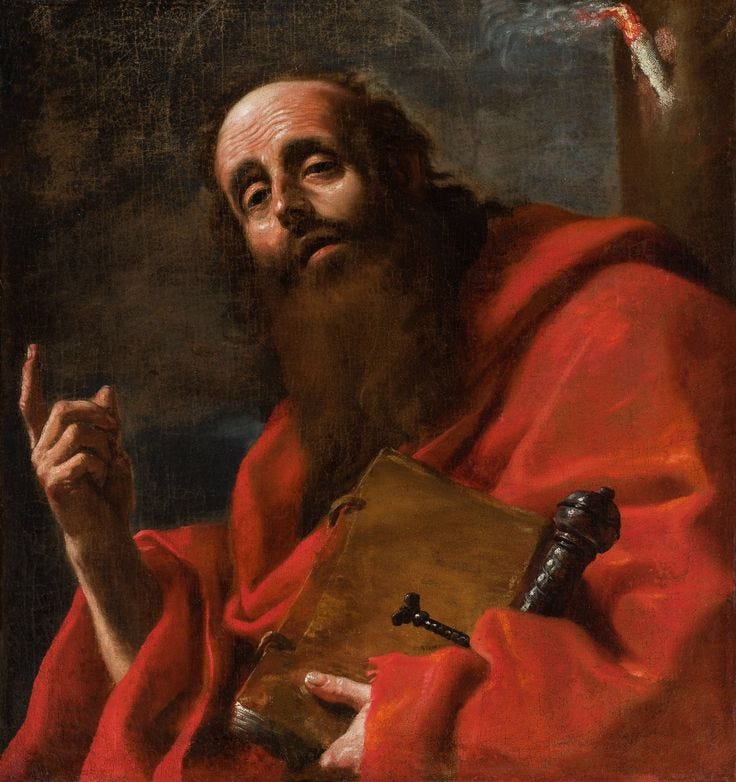
I have always believed that Scripture must be read with honesty. Not fear, not defensiveness and especially not apologetics that twist verses into pretzels. but with honesty. And few passages demand honesty more than Paul’s instruction in 1 Corinthians 14:34, where he says women should “remain silent” in church. On paper, it is jarring. In real life, it has been used to wound, silence and limit countless women.
Yet when I look at the full picture, the context Paul was addressing, the people he worked with, the cultural realities he navigated and the theology he shaped, I find that the verse says far less about excluding women and much more about correcting disorder. The bitterness people feel today comes less from Paul himself and more from what later generations chose to do with his words.
Let me walk through this carefully.
Corinth was a Church in Chaos
Paul was not writing to a polished and disciplined congregation. Corinth was the Wild West of the early Church. It was spiritually gifted, yes, but also chaotic, loud and confused. His entire letter is essentially crisis management.
In chapter 14, Paul is dealing with noise:
people shouting prophecies over each other
tongues erupting with no interpretation
questions being asked mid-service
and yes, women, who were only recently welcomed into learning spaces, interrupting gatherings with questions
This was a world without schools for women, without literacy for women and without theological training for women. The early Church had opened its doors to those who had never been allowed to sit and learn. Suddenly, they had questions, many questions and they were asking them during the liturgy.
When Paul says women should ask their husbands at home, he is not laying down a universal rule. He is responding to a very specific disruption in a very specific community.
And we know this because just three chapters earlier (1 Corinthians 11:5), he acknowledges women praying and prophesying aloud in church. The same letter. The same writer. The same recipients.
So clearly Paul was not against women speaking. He was against disorder. The silence he requested was situational and not eternal.
The Evidence We Keep Forgetting
The irony is that Paul is one of the most radically pro-woman voices in early Christianity.
When I read his letters without the filters of later interpretations, I see a man who trusted women, collaborated with them, affirmed their gifts and defended their dignity in a world that barely recognized them as full persons.
Phoebe — a diakonos, entrusted with carrying and explaining the Letter to the Romans, one of Paul’s most complex works.
Priscilla — a brilliant teacher who corrected the theology of Apollos.
Junia — an “outstanding apostle”, praised without apology.
Lydia — a leader of a house church.
Chloe, Tryphena, Tryphosa, Nympha — women Paul names as co-laborers in the Gospel.
These are not footnotes. These are leaders.
Whatever tone we hear in 1 Corinthians 14 must not drown out the overwhelming melody of Paul’s ministry which was basically saying women were essential to the early Church.
When New Voices Enter Leadership
Another often-ignored angle is the educational reality of the ancient world.
Men had some access to philosophy, rabbinic teaching, literacy and public debate. Women rarely did. So when Christianity invited women into full participation, something revolutionary for its time, the learning curve was steep. Of course there were interruptions. Of course there were questions. Of course some women, newly empowered, explored this freedom in ways that disrupted the gatherings.
Paul was not suppressing women. He was teaching them how to grow into this new freedom responsibly. The early Church was not ready for women theologians only because the world had not yet allowed women to become theologians.
This context matters. Without it, we misread Paul entirely.
The Sociological Convenience of Silence
Now, let me shift to the uncomfortable part.
If Paul himself upheld women, why has the verse about women’s silence been so widely weaponized? The sociological answer is simple, power.
Silencing women is convenient for those who want to control:
church structures
finances
theological direction
moral authority
public leadership roles
A verse like 1 Corinthians 14:34 becomes extremely useful if you want to maintain a hierarchy where one gender speaks and the other listens. Paul becomes the scapegoat for agendas he never intended.
Some churches, consciously or unconsciously, use the verse not as pastoral advice, but as a strategy, to keep women in the pews and not the pulpit. And once an interpretation reinforces an existing power structure, it tends to get defended fiercely. This is not theology. This is sociology misusing Bible verses.
Why Women Cannot Be Priests, A Catholic POV
Now, here is where the conversation requires precision. I am Catholic and the Catholic Church does not ordain women. But the reason is fundamentally different from the misinterpretations above.
The Church does not forbid women priests because Paul said “women must be silent.” It does not forbid women priests because women lack dignity or leadership ability. It does not forbid women priests because of cultural bias.
The reason is Christological. What do I mean by this? The priesthood is apostolic. Jesus chose twelve men as apostles.
And the Church sees this choice not as cultural conformity, Jesus broke cultural norms constantly but as divine intention within the sacramental order. The Church believes that because Christ instituted the sacrament, the Church cannot alter its essential form.
Pope John Paul II put it clearly in Ordinatio Sacerdotalis: “The Church has no authority whatsoever to confer priestly ordination on women.”
This is not an argument about ability. It is an argument about sacramental validity.
Catholic theology distinguishes between:
sacramental roles (reserved to ordained clergy)
leadership and holiness (open to all the baptized)
So the Church honours women profoundly, from doctors of the Church to mystics, missionaries, queens, abbesses, martyrs and modern saints, yet maintains the apostolic structure of ordination.
This is a theological distinction and not a power play.
So What Do We Take From All This?
When I step back and read Paul in context, I do not see a man trying to keep women small. I see a pastor trying to build a church in a world that had never imagined women as equals, let alone leaders. I see someone correcting situational issues, not laying down eternal bans. I see someone surrounded by brilliant women who shaped Christian history.
The tragedy is not what Paul wrote. The tragedy is what later generations chose to hear.
If we read Scripture with honesty, we find a story much bigger than silence. We find a story of dignity, calling and the gradual becoming of women’s leadership across the centuries. And if we read with nuance, we understand why the Catholic Church holds its sacramental position without reducing it to sexism or selective interpretation.
In the end, the question is not whether women should lead. They already do, in Scripture, in history, in the Church and in society. The real challenge is to read Paul faithfully enough to see that he never feared women’s voices. He only feared a Church that could not listen to each other. And that is a warning for all of us.
All I can say is wowww!!!!Bless you for this piece and for opening the eyes of many including mine.When I saw the verse, I went straight to my bible to see what it says and immediately felt some type of way but then this writing sent me back to the same bible to get the context clearly by reading the before and after verses.
I love your observations. However, I would say that many protestants (like CS Lewis and Thomas Schreiner) would say that women cannot be elders because of Christology. Read priestesses in the church, by Lewis, for instance. This is precisely the reason people like John Piper and John Frame and Jonathan Edwards (all the protestant Johns...) would argue. I'm not saying that they're right, but to say that Catholics have a monopoly on gender roles as Christology is to strawman protestantism a bit.
All that said, I do greatly resonate with these observations and thoughts.
I wonder if you have considered a canonical approach to Paul:
https://crowdster.substack.com/p/the-historical-context-of-the-pauline