
On Performative Reading

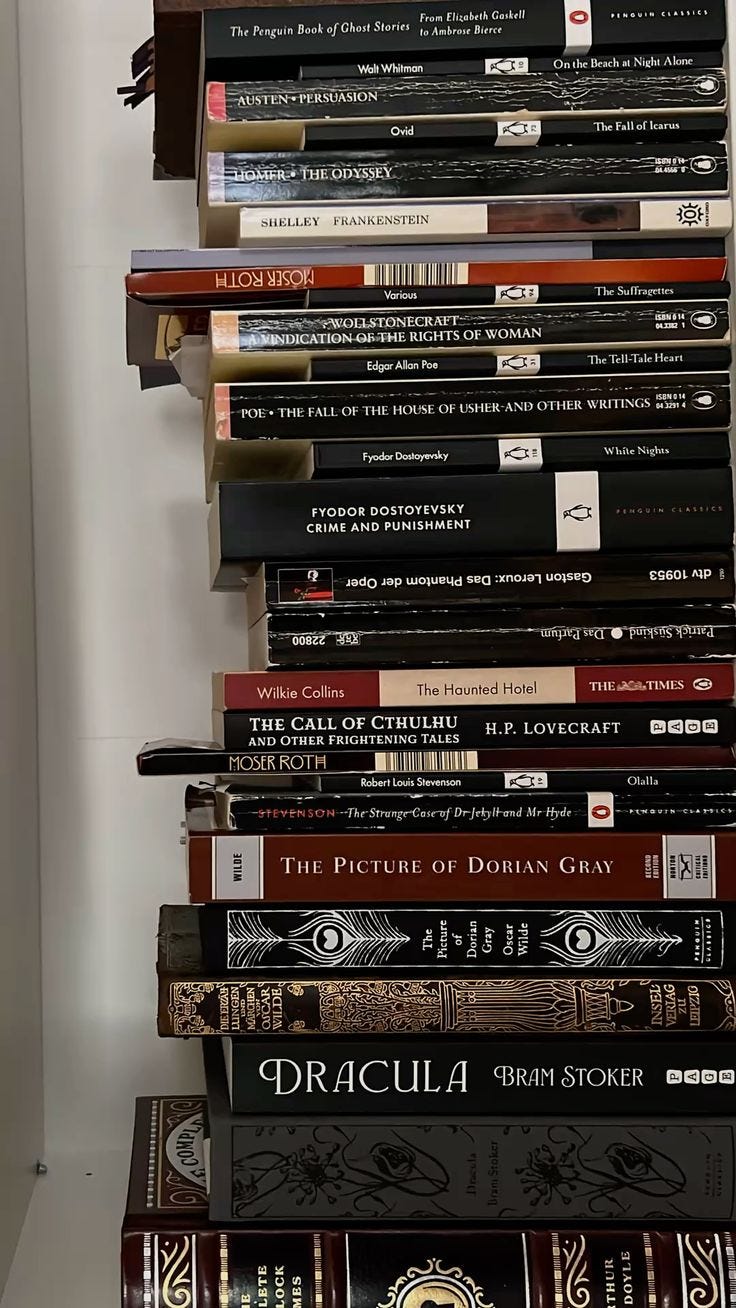
For reference, here is the link to the TikTok that got me writing this at 3 AM… On classic literatures
I was aimlessly scrolling through TikTok at 3 AM, Laura Mbatha was yet to appear on my timeline. So I was scrolling the way one does when the night has not yet decided what it wants to be, and I stumbled into what I can only call an atrocious take. The target was A Thousand Splendid Suns by Khaleed Hoseini. Not because it was thematically hollow. Not because it was structurally incompetent. Not because it fails at character, pacing, or emotional coherence. No. It was dismissed because the English is “grade five at best,” and because it carries that apparently suspicious label, international bestseller. According to who? The TikToker asked. As if global sales figures were a mystical conspiracy rather than a measurable market category. I blame Colleen Hoover.
What unsettled me was not disagreement. Literature thrives on disagreement. What unsettled me was the reduction. The book was flattened into vocabulary level. Its worth was measured by how many unfamiliar words one could extract from it, as though the highest aim of fiction were lexical expansion. By that logic, a thesaurus is a greater artistic achievement than a novel.
The argument reveals something deeper than taste. It reveals a posture. Reading, especially in visible online spaces, has become a performance. The classics become cultural capital. Once acquired, they are brandished. And once brandished, they demand a contrast class. Something must be declared beneath them to sustain the hierarchy. Accessibility becomes synonymous with inferiority. Simplicity becomes evidence of mediocrity.
But simplicity and shallowness are not twins. They are not even cousins.
Khaleed Hoseini writes with clarity. His prose does not contort itself into syntactic labyrinths. It moves. It carries. It makes itself available. That availability is not evidence of intellectual poverty; it is a stylistic choice aligned with his narrative aims. The novel’s force lies not in ornate diction but in emotional architecture. We have Mariam and Laila, the intergenerational wounds, the weight of political upheaval, the slow burn of endurance under violence. The sentences do not obscure the suffering; they deliver it.
If difficulty is only located in vocabulary density, then yes, the book will appear “easy.” But that is a narrow definition of difficulty. Let's look at one of my all time favorites, Wuthering Heights, it is difficult in syntax, in narrative layering and in tonal abrasiveness. Emily Bronte constructs a world that resists immediate comfort. The structure itself demands interpretive stamina. That is one form of challenge.
There is another.
Emotional endurance. Moral confrontation. The demand that you sit with injustice without the anesthetic of elaborate prose. The Brothers Karamazov by Fyodor Dostoevsky is philosophically dense, layered with theological and existential argument. Its difficulty is intellectual, dialogic and metaphysical. But does that automatically render every text that chooses a different mode inferior? Of course not. They are pursuing different artistic projects.
And if we are to be truly radical about it, one could even argue that Dr Seuss, with his rhythmic economy and structural precision, has shaped linguistic consciousness for millions in a way that rivals the cultural footprint of so-called high literature. Monumentality is not solely measured in syntactic complexity. It is measured in impact, durability, reach and formal control. The ability to compress meaning into accessible language is not lesser craft. It is a different craft.
The suspicion of “international bestseller” betrays a confusion between market category and aesthetic judgment. Bestseller status is descriptive, not evaluative. It tells you how many copies moved across borders, not whether the book deserves reverence. One can critique the publishing industry, marketing machinery, or global taste formation. That is legitimate. But to dismiss a work solely because it sold widely is to conflate popularity with artistic fraud. It assumes that resonance at scale is inherently suspect.
History does not support that assumption. Moby-Dick by Herman Melville failed commercially in its time and later ascended into the canon. Reception is unstable. Canonization is contingent. What is mocked in one era is sanctified in another. What is celebrated in one generation is interrogated in the next. Literary status is not a divine decree; it is an evolving conversation.
Even contemporary writers like Colleen Hoover are often dismissed on the same grounds of accessible language, emotional directness and broad readership. I am not her defender. There are structural criticisms to be made, questions about sentimentality, about narrative construction, about how emotional stakes are engineered. Those are serious critiques. But to equate readability with intellectual deficiency is to confuse opacity with depth. A book can be flawed without being linguistically juvenile and it can be linguistically simple without being artistically worthless.
The deeper issue is that reducing literature to a single metric impoverishes it. Language is part of structure, yes, but it is not the whole. Plot architecture, character arcs, thematic layering, pacing, symbolic patterns, historical context, emotional cadence, all of these constitute the organism of a novel. Sever language from the rest and declare it the sole criterion and the body of the text collapses into caricature.
Performative reading thrives on such reductions because they are efficient. They signal superiority quickly. “Grade five English” is a dismissive shorthand. It announces discernment without engaging the totality of the work. It shifts the focus from what the book accomplishes to what the reader wishes to project.
None of this means that A Thousand Splendid Suns is beyond critique. A rigorous critique might question its sentimentality, its narrative predictability, or its deployment of suffering. That would be a serious engagement. But vocabulary level as the decisive blow? That is thin ground on which to build authority.
If we truly care about literature, we must resist collapsing it into hierarchies of difficulty that flatter our identities. Loving the classics does not require scorning the accessible. Intellectual seriousness is not threatened by emotional clarity. And accessibility is not an artistic sin.
Anyway, let me just ask, if Hosseini’s language is simple, but the emotional architecture of the novel, Mariam, Laila, the intergenerational suffering, the political backdrop of Afghanistan, is complex in its moral stakes, where exactly do we locate “difficulty”? Is it in syntax? Or is it in what the text asks us to endure?
From my pov, there is a lot of performative reading going on in that clock app. People there read to get the 'big words' they can use to express themselves coz somehow that's their measure of intellectualism. Ofcourse one of the reasons we read is to expand our vocabulary, but have you sat with the themes, what is the context of the whole novel, what its correlation with contemporary issues, etc.?And sometimes we just read for fun, I mean. So reviewing a novel based on how many buzzwords it contains is some crazy business. There is a lot more to literary work than the words.
I’d have been so mad listening to that review at that time 😂💀. SMH