
Incarnation
From the Triumphant Entry to the Empty Tomb. My Meditation on the Sacred Mysteries of Holy Week
The Word became flesh and made His dwelling among us. We have seen His glory, the glory of the one and only Son, who came from the Father, full of grace and truth.—John 1:14
Prelude: The God Who Came Down
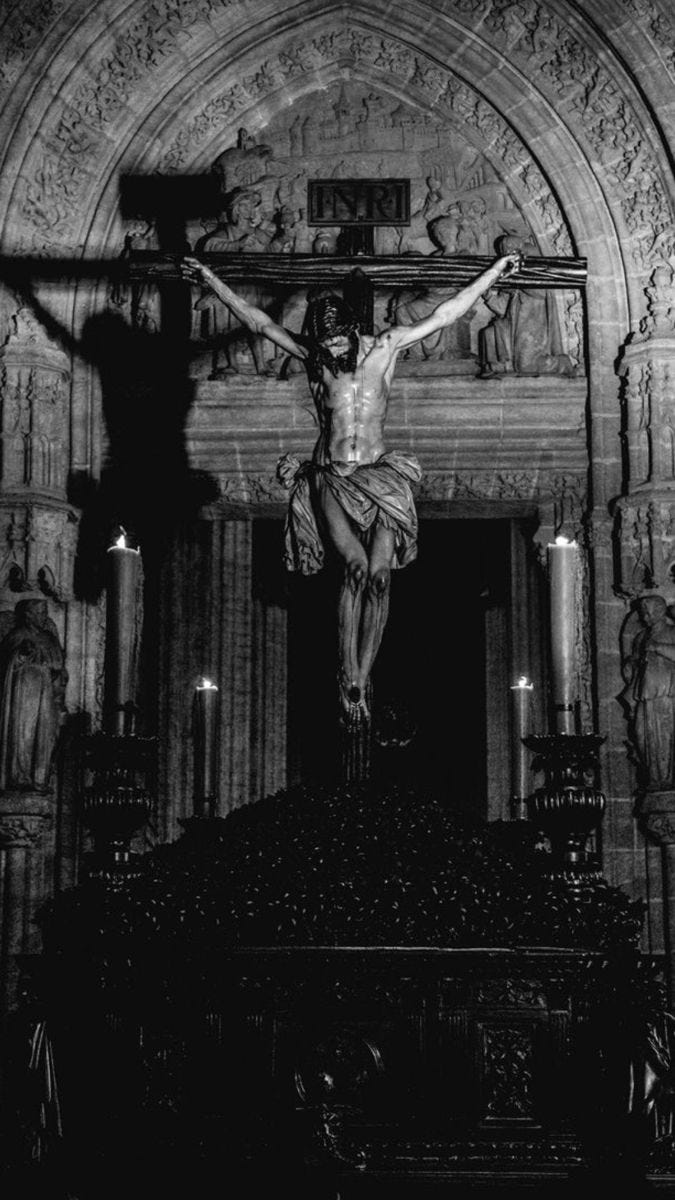
If ever there is a question that haunts every civilization, every religion or every human heart that has ever looked at the sky and wondered, it is the question whether there is someone there. And if there is—does He know we are here? Does He care? Has He ever come?
Christianity answers this question not with a philosophy, not with a code of conduct, not with a distant deity speaking through thunder and smoke—but with a Person. A named, dateable, touchable and crucifiable Person who walked dusty roads, wept at the graves of friends, held children in His arms and bled under Roman nails. The Incarnation—God becoming flesh—is not merely a doctrine of the Church. It is the central and most scandalous claim in all of human history.
And it is the claim that Holy Week, that sacred span from Palm Sunday to Easter, sets before us every year—not as a memory to observe, but as a mystery to inhabit.
This is not a story we watch from a distance. This is a story we are pulled into. The Catholic liturgical tradition understands this. It does not simply tell you what happened. It walks you through it, bodily and spiritually, until you have lived it—until the silence of Good Friday feels like your own silence and the Alleluia of Easter bursts from your own chest.
Come then. Let us walk through it. Let us follow Him—from the shouts of a crowd that did not yet understand, to the silence of a tomb that could not hold Him.
Palm Sunday: A King on a Donkey
Hosanna to the Son of David! Blessed is he who comes in the name of the Lord! Hosanna in the highest heaven!—Matthew 21:9
Jerusalem was always a city on edge. Under Roman occupation, it seethed with the silent fury of a people who remembered their kings, who still sang the psalms of David and who still awaited the Messiah that the prophets had promised. And on this day, this particular Sunday before Passover, something extraordinary was happening at the city gates.
A man was coming. And the crowds were losing their minds.
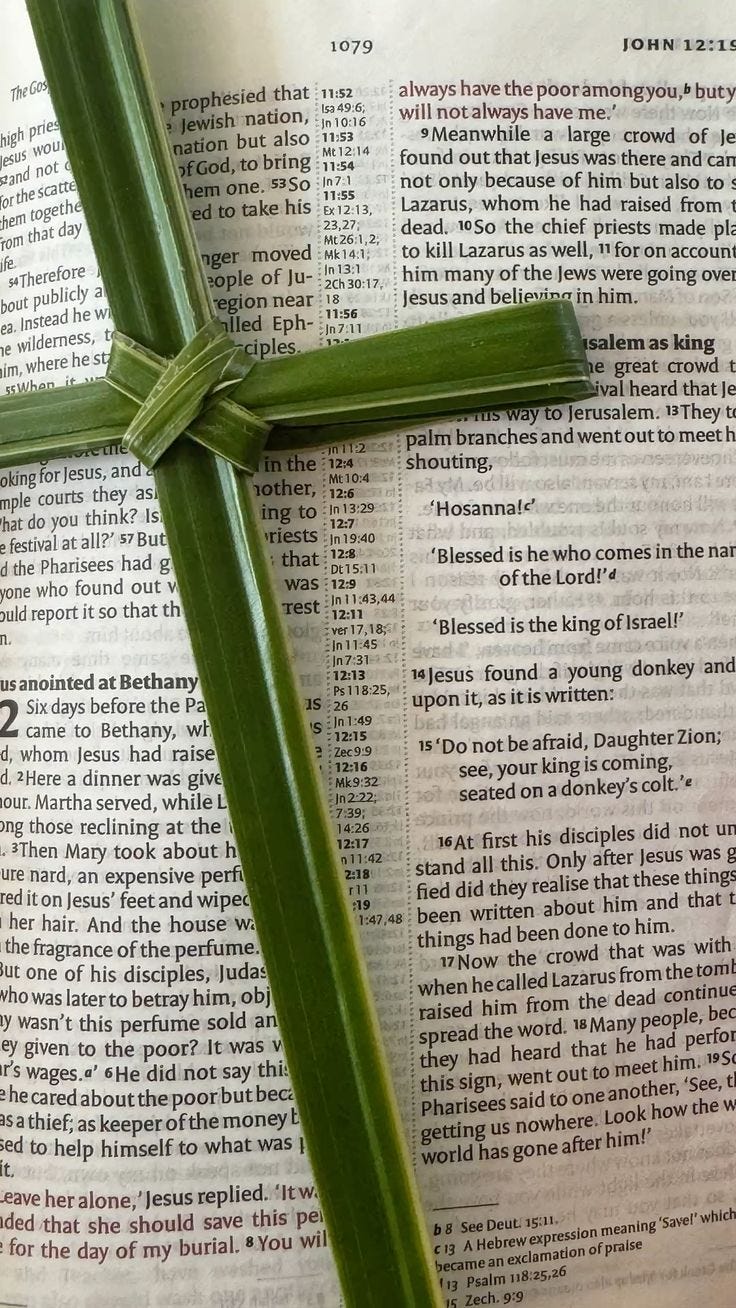
They threw their cloaks on the road. They cut palm branches and waved them like banners of war. They shouted Hosanna—which means, save us now—a word so loaded with political and theological weight that it was essentially a coronation cry. They were receiving a king.
But look carefully at the king they were receiving. He did not come on a war horse, armored and terrible. He came on a donkey—a young one, borrowed and humble. This was deliberate and those who knew their scriptures understood it immediately. The prophet Zechariah had written, five centuries earlier, 'Rejoice greatly, O Daughter of Zion! Shout, Daughter of Jerusalem! See, your king comes to you, righteous and having salvation, gentle and riding on a donkey.' He was fulfilling prophecy in real time, in public and in front of thousands.
And yet there was a profound sadness threaded through this triumph. As He crested the Mount of Olives and the city came into view, Jesus wept. Wept over Jerusalem. The crowd was cheering, the palms were waving, the Hosannas filled the air—and He was weeping. Because He could see what they could not. He could see that the very city shouting His name would, within the week, be shouting for His blood. He could see the destruction that was coming—the Romans who would raze this city to the ground within a generation. He could see the tragedy of a people so close to salvation, and so blind to its face.
Palm Sunday is the day of joy and sorrow worn simultaneously. It is the day God enters His own city knowing what awaits Him—and enters anyway. That is love. Not the love that comes when conditions are favorable but the love that comes anyway.
In Catholic parishes around the world, this day begins with the blessing of palms and a procession—the congregation itself becoming the crowd, walking with Christ into the week that will change everything. The palms we carry are not decorations. They are our own Hosannas. Our own cry of Save us. And they are also our own shadow—because we know, as the crowd did not, that the salvation coming is not the kind they expected.
The Days Between: The Temple, the Teaching, the Tension
The days that follow Palm Sunday—Holy Monday, Holy Tuesday, Holy Wednesday—are often overlooked in popular telling, but they crackle with intensity. Jesus does not rest on His laurels after the triumphal entry. He enters the Temple and drives out the money changers, overturning tables and chairs while declaring, 'My house shall be called a house of prayer, but you have made it a den of robbers.' He is not a gentle reformer at this moment. He is a consuming fire.
He teaches in the Temple courts, day after day, and the chief priests and the scribes and the elders circle Him, testing Him, trying to trap Him—and fail, every time. He speaks in parables that are simultaneously simple and devastating. He pronounces woes upon the religious leaders who have turned faith into performance and performance into power. He foretells the destruction of the Temple, and speaks of the end of days with a calm that unnerves everyone around Him.
And on Holy Wednesday, something shifts. In the house of Simon the leper in Bethany, a woman breaks open an alabaster jar of pure nard—worth a year's wages—and pours it on His head. The disciples are scandalized by the extravagance. Jesus silences them, 'She has done a beautiful thing to me. She did it to prepare me for burial.'
Burial. The word has entered the room. The shadow of the cross has grown long. And in the darkness, Judas goes to the chief priests and makes his deal. Thirty pieces of silver. That was the price of a slave and so it became the price of God.
Holy Thursday: The Night He Gave Himself Away
This is my body, which is given for you. Do this in remembrance of me.—Luke 22:19
If Palm Sunday is the day of paradox—triumph and tears—then Holy Thursday, the Thursday of the Lord's Supper, is the day of gift. The most staggering, most tender and most theologically dense gift ever given.
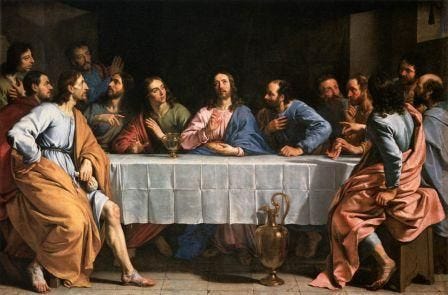
The Passover meal was not a casual dinner. It was the holiest meal in the Jewish calendar—the annual remembrance of the night God passed over Egypt and delivered His people from slavery. Every element of the meal was ritual, every word was scripture and every bite was memory. Jesus and His twelve reclined around the table, and He knew—He alone knew fully—what this night was.
He began by doing something that stopped everyone in the room cold. He got up from the table, took off His outer robe, wrapped a towel around His waist, and began to wash His disciples' feet. The feet of fishermen and tax collectors and zealots. The feet of the man who would deny Him three times before dawn. He knelt before them all. The Lord of the Universe, kneeling in the posture of a slave. When Peter protested—'Lord, you shall never wash my feet'—Jesus replied, 'Unless I wash you, you have no share with me.' This is the mystery of service as communion. He was not performing humility for the crowd. He was revealing the nature of love.
And then He came to the bread. He took it. He blessed it. He broke it. And He said words that altered the course of history, 'This is my body, given for you.' He took the cup. He gave thanks. He passed it, 'This cup is the new covenant in my blood, which is poured out for you.' This was not metaphor. This was not symbol. The Catholic Church, rooted in the testimony of the Apostles and the unbroken tradition of two thousand years, has always understood these words in their fullness, that what Jesus held in His hands that night was, truly and substantially, Himself. His body. His blood. His soul. His divinity. Given. For you.
In that moment, He instituted the Eucharist—and with it, the priesthood. For He did not merely perform this once and leave the memory behind. He commanded, 'Do this in remembrance of me.' In giving His disciples this mandate, He ordained them as the first priests of the New Covenant. The priest at Mass is not performing a reenactment. He is standing in the person of Christ—in persona Christi—at the very same altar of sacrifice, offering the very same body and blood. Every Mass is Calvary. Every consecration is that Upper Room.
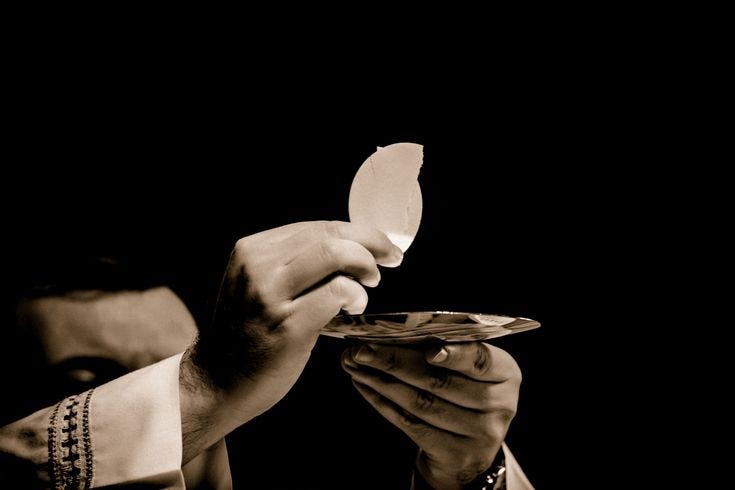
Behold the Lamb of God, behold Him who takes away the sins of the world. Blessed are those called to the supper of the Lamb.
The Mass of the Lord's Supper on Holy Thursday is unlike any other Mass in the liturgical year. It begins in joy—the Gloria rings out for the first time since Ash Wednesday, and the church bells peal with it, only to go silent for the rest of the Triduum. There is a washing of feet, echoing what Jesus did in the Upper Room. And then, at the end—silence.
The Blessed Sacrament is processed in solemn silence to a place of reposition—an altar of repose, often decorated as a garden, recalling the Garden of Gethsemane where Jesus went after supper to pray. And the tabernacle is left empty. The altar is stripped bare. The cloths removed. The candles snuffed. The cross veiled.
And those who remain in adoration that night are keeping watch with Him in the garden—where He sweat blood, where He prayed 'let this cup pass from me, yet not my will but thine,' where He was betrayed with a kiss and where the disciples fell asleep. This is the night of the greatest vigil and the greatest abandonment.
Good Friday: The Day God Died
Father, forgive them, for they do not know what they are doing.—Luke 23:34
There is no Mass on Good Friday. This is one of only two days in the entire Catholic calendar—the other being Holy Saturday morning—when the Eucharist is not celebrated. The altar stands bare. The tabernacle is empty. The silence of the church is not merely ceremonial. It is theological. The silence is saying something, that this is what the world looks like without Him.
What happened on that hill outside Jerusalem two thousand years ago is the hinge of all of human history. A man—who was also God—was led out of the city carrying a cross beam that He could barely hold. He fell. He was helped, reluctantly, by a stranger from Cyrene pulled from the crowd. Women wept. He told them not to weep for Him but for themselves and their children.
He was nailed to the wood. The nails went through His wrists and His feet. The cross was lifted and dropped into its socket, and the full weight of His body pulled against iron. He hung there for six hours. And He spoke seven times—words so layered with meaning that centuries of theology have not exhausted them. He forgave. He promised paradise to a dying criminal beside Him. He gave His mother to His beloved disciple—and His disciple to His mother. He cried out in the words of the 22nd Psalm, 'My God, my God, why have you forsaken me?'—the prayer of desolation that is also, in its fullness, the prayer of ultimate trust. He thirsted. He declared, 'It is finished.' And He commended His spirit to the Father and died.
The veil of the Temple—the great curtain separating the Holy of Holies from the rest of the world—tore from top to bottom. The earth shook. The dead rose from their tombs and walked in the city. A Roman soldier, watching, said, 'Truly this man was the Son of God.'
In the Catholic tradition, Good Friday is the day of the Way of the Cross—the Via Crucis—in which the faithful walk the fourteen stations of His Passion, stopping at each to contemplate and pray. In some places, someone carries a heavy wooden cross through the streets. The road is empty ahead. The weight is real. And in that moment—the moment of carrying—something extraordinary happens, the boundary between memory and mystery dissolves. You are not remembering a man from two thousand years ago. You are essentially walking with Him. You feel, for a moment, what He felt. Not in its fullness—never in its fullness—but enough to break you open. Enough for tears.
The Good Friday liturgy itself is one of the most ancient in the Church. The priest and ministers prostrate themselves before the altar at the beginning—lying face down on the floor in total adoration and supplication—an act performed only on this day and at priestly ordinations. It is the posture of absolute surrender. Of smallness before the immensity of what is being remembered.
The Passion is proclaimed. The intercessions for the whole world are prayed—for the Church, for the Pope, for all the faithful, for those preparing for baptism, for all Christians, for the Jewish people, for those who do not believe in Christ, for those who do not believe in God, for those in public office and for those in special need. On this day, the Church prays for everyone. Because on this day, He died for everyone.
And then the Cross is unveiled—slowly, three times—and the faithful venerate it. They come forward. They kneel. They bow. They kiss the wood. And in that gesture—that ancient, simple, bodily gesture—something of the truth of the Incarnation is understood that no sermon could convey. He was not a spirit. He was not a symbol. He was flesh. And this wood held His flesh. And my lips can touch this wood.
Behold the wood of the Cross, on which hung the salvation of the world. Come, let us adore.
Holy Saturday: The Great Silence—Magnum Silentium
Holy Saturday is the strangest day in the Christian year. It is the day of the tomb. The day of waiting. The day of the silence that is too heavy to be empty.
The Church, stripped of her ornaments, offers no sacraments through the morning. The tabernacle stands open and bare—the door ajar, the interior empty with a wound visible to everyone who enters. There is no Mass. There is no Eucharist. There is only the waiting. And in that waiting, the Church enters into what theology calls the Harrowing of Hell—the ancient belief, proclaimed in the Apostles' Creed, that in the time between His death and resurrection, Christ descended to the realm of the dead and liberated the souls of the righteous who had waited in hope. He was not idle in the tomb. Even in death, He was saving.
The emptiness of the church on Holy Saturday is not the emptiness of absence. It is the emptiness of held breath. Of a world suspended between Friday's devastation and Sunday's impossibility. It is the silence of the disciples locked in their upper room, not yet knowing what we know. It is the silence of grief before it becomes joy.
And then—after nightfall—everything changes.
The Easter Vigil: Fire in the Darkness—Lux Christi
The light shines in the darkness, and the darkness has not overcome it.—John 1:5
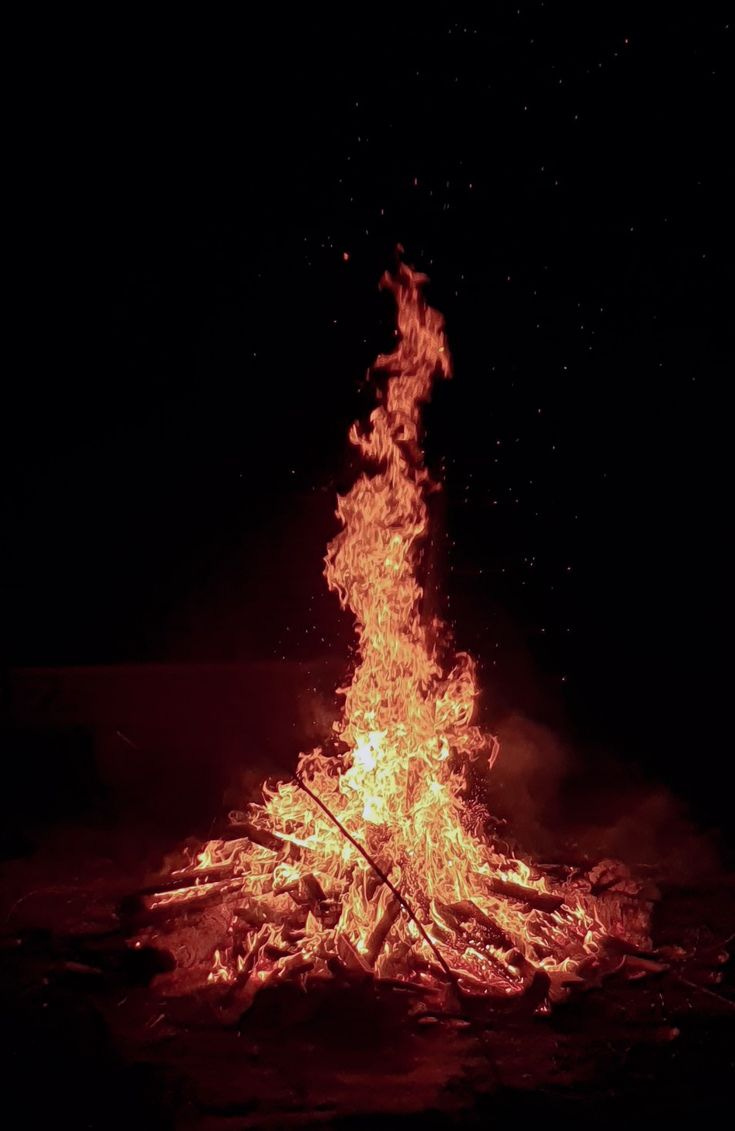
The Easter Vigil is the mother of all liturgies. The Church calls it the night above all nights—haec nox est—this is the night. It is the longest, most complex, and most beautiful liturgy of the entire year. And it begins in darkness.
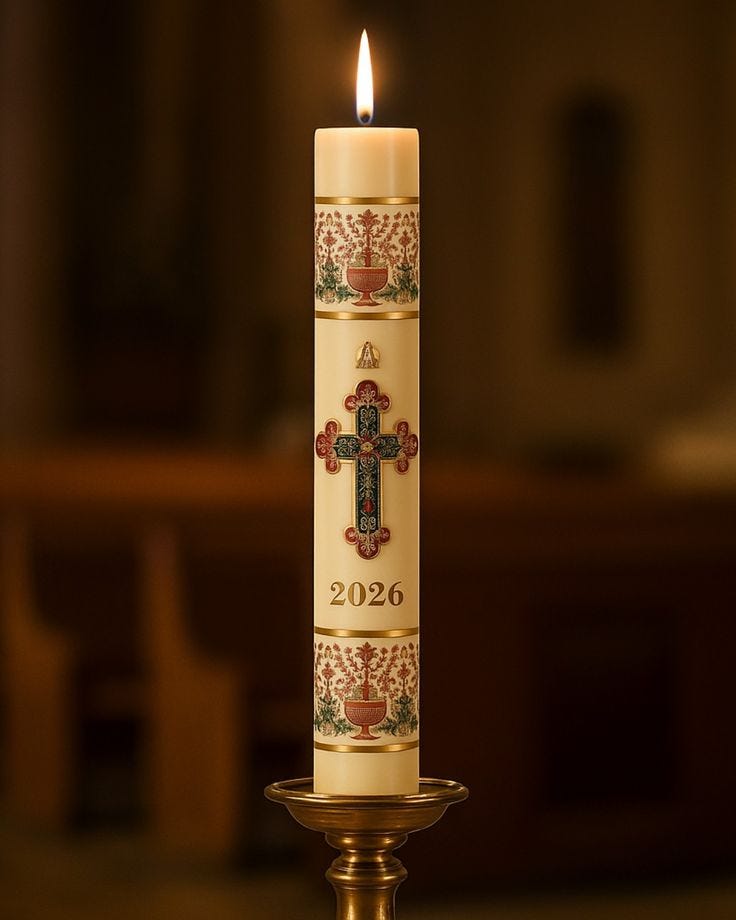
Outside the church, in the cold, a fire is struck. A new fire—blazing and wild. From this fire, the Paschal Candle is lit—the great Easter candle that represents the Risen Christ, the Light of the World. And then, in a moment that has moved the hearts of the faithful for fifteen centuries, the deacon or priest lifts the candle and sings three times, in increasing pitch, Lux Christi. The Light of Christ. And the people respond, three times, Deo gratias. Thanks be to God. The candle is processed into the darkened church. The light spreads from candle to candle, hand to hand, person to person, until the whole building is ablaze with fire held in human hands.
And then the Exsultet rings out—the ancient Easter Proclamation, one of the most magnificent pieces of sacred poetry ever composed, sung by the deacon in an elaborate melody that soars and trembles and exults. It is a song of such extravagant joy that it dares to call the sin of Adam a 'happy fault'—felix culpa—because it won for us so great a Redeemer. It sings of this night as the night that scattered darkness, the night of liberation from Egypt and the night that burst the bonds of death.
Exult, let them exult, the hosts of heaven... Rejoice and sing now, all the earth, bright with a glorious splendor, for darkness has been vanquished by our eternal King.
The Liturgy of the Word follows—readings stretching from Creation through the Exodus through the prophets, the whole sweep of salvation history rushing toward this moment like rivers to the sea. And then, the Gloria. The bells. And for the first time since Holy Thursday, the word Alleluia—the word that was buried with Him—explodes back into the world. The cantor sings it once, twice, three times, each time higher, and the congregation erupts.
The Triduum Paschale—the Sacred Triduum of Holy Thursday, Good Friday, and Holy Saturday—is not three liturgies. It is one. One continuous act of worship that mirrors the one continuous act of salvation. It does not end on Thursday. It does not conclude on Friday. It holds you in its arms through the silence of Saturday and releases you—transformed—into the fire of Sunday morning.
This night, those who have been preparing through Lent receive their sacraments—Baptism, Confirmation and Eucharist. They enter the Church through water and fire. And the entire congregation renews its own baptismal promises, rejecting sin and professing faith, while the priest sprinkles them with holy water. We remember what we are. We remember what was done for us.
Easter Sunday: He Is Risen—Christus Surrexit
Why do you look for the living among the dead? He is not here; he has risen!—Luke 24:5-6
The tomb was sealed. A stone was rolled across it and soldiers were posted to guard it, because the chief priests remembered that He had spoken of rising on the third day and they wanted no complications. Let the memory die with the body. Seal it. Guard it. Be done with Him.
They could not seal it enough.
On the first day of the week, before dawn, the women came with spices to anoint the body. They found the stone rolled away. They found the tomb empty. They found angels—and then they found Him. Mary Magdalene, weeping in the garden, heard her name spoken by a voice she recognized, 'Mary.' One word. Her name. And she knew. She turned and saw Him—not a ghost, not a vision, not a hallucination—but a Man. The same Man. The wounds still in His hands and His side. But glorified. Transformed. Impossibly, undeniably and irrevocably alive.
The resurrection is not a spiritual metaphor. The Catholic faith, and Christianity entire, is rooted in the claim that a specific man died and a specific man rose from a specific tomb in a specific city on a specific morning. Paul writes with the bluntness of a man who knows everything depends on this, 'If Christ has not been raised, your faith is futile; you are still in your sins... But Christ has indeed been raised from the dead.' Not spiritually. Not symbolically. Bodily. Historically. Really.
For through the law I died to the law so that I might live for God. I have been crucified with Christ and I no longer live, but Christ lives in me. The life I now live in the body, I live by faith in the Son of God, who loved me and gave himself for me.—Galatians 2:19-20
And the evidence—for those who examine it honestly—is remarkable. The tomb was empty, and not even the enemies of Jesus denied it. They tried to explain it by claiming the disciples stole the body—a story so implausible (fishermen overpowering a Roman guards? To perpetuate a lie for which they would all die without a single recantation?) that it persuaded no one. The disciples, who had scattered in terror on Good Friday, were transformed within days into people willing to die—and who did die, most of them—proclaiming the resurrection. Something happened. Something that turned cowards into martyrs. Something that turned the cross—the symbol of ultimate shame and defeat—into the most recognized symbol of hope in human history.
He appeared to Mary Magdalene. To the disciples on the road to Emmaus. To the eleven in the upper room, inviting Thomas to touch His wounds. To more than five hundred people at once, as Paul records—a detail Paul included specifically because many of those witnesses were still alive when he wrote and still available to be questioned.
The world has never been the same. Every Sunday Mass is Easter. Every Eucharist is the resurrection made present. Every time the priest elevates the host and says 'the Body of Christ' and a person responds 'Amen'—that Amen is a declaration of faith in the empty tomb.
The Incarnation: Why It Is Evidence
Across the great traditions of human religion, the divine tends to remain divine—distant, untouchable and addressed through ritual and approached through mediation. The gods of Olympus played with humans as pieces on a board. The God of deism wound up the universe and stepped away. The transcendent ultimate of Eastern philosophies is, by definition, beyond personhood and particularity.
But in Christianity—and in its fullness, in Catholicism—God does something that no other major religious tradition claims in quite the same way. He becomes one of us. Not a phantom wearing human skin. Not a divine visitation that bypasses human biology. He is conceived in a womb. He grows. He learns. He bleeds. He dies. The Second Person of the eternal Trinity, through whom all things were made, is born in a stable in a provincial town in an occupied territory and lays in a feeding trough. This is the scandal of particularity—the staggering specificity of God's entrance into history.
And this particularity is exactly what makes it verifiable in a way that no other divine claim is. You cannot verify a spiritual feeling. You cannot historically investigate a mythological narrative. But you can investigate whether a man named Jesus of Nazareth lived, was crucified under Pontius Pilate, and was reported to have risen from the dead. And the historical evidence—from Roman historians like Tacitus and Jewish historians like Josephus, from the internal consistency of the Gospel accounts, from the inexplicable transformation of the early Church—points, with remarkable force, toward the truth of the claim.
Other religions have prophets who received divine messages. Only Christianity claims that its founder was the message. Only Christianity has a God who did not send intermediaries but came Himself. Who did not prescribe a path to holiness but walked it, in human feet, and invited us to follow. Who did not promise to be with us in spirit only but left Himself—genuinely, substantially, really—in the Eucharist, so that we would never be without Him.
'He who eats my flesh and drinks my blood abides in me, and I in him.' This is the promise. This is the mystery. This is why the Eucharist is not an afterthought but the source and summit of Christian life. He did not merely leave us a teaching. He left us Himself.
Coda: What Holy Week Does to a Person
I carried the cross on Good Friday during The Way of The Cross. The road ahead was empty. The wood was heavy. The hymns rose around me like incense. And in that moment—the moment of carrying—something impossible happened. I was no longer in the 21st century, on a street, in a procession. The centuries collapsed. The distance dissolved. I was on a road with Him, and He was on a road with me. Not as an equal in suffering—never that—but as someone called to remember, to witness and to carry in my body what He carried in His.
He was doing it to fulfill a prophecy. To give us salvation. To finish what love, once it had decided to save us, could not stop itself from doing. I was doing it in remembrance. And yet the remembrance was so full of His presence that the distinction between then and now became, for a moment, thin.
This is what Holy Week does. It does not merely inform you. It does not merely move you emotionally. It reforms you. It takes you through death—through the stripping, the silence, the darkness, the empty tabernacle—so that you can be reborn into the Alleluia. You cannot fully feel the joy of Easter if you have not sat in the silence of Holy Saturday. You cannot receive the gift of the Eucharist without understanding what it cost Him. The architecture of the Triduum is the architecture of salvation itself, Friday's cross, Saturday's tomb, Sunday's empty grave.
The Catholic liturgical tradition has preserved this in its fullness—the prostrations, the stripping, the washing, the fire, the water, the Exsultet, the baptisms and the renewal of vows—because it understands that the Paschal Mystery is not a story we tell. It is a mystery we enter.
And we enter it every year, and every year it undoes us and remakes us. Every year the silence of the empty church says what words cannot. Every year the Lux Christi pierces the darkness and we answer, thanks be to God. Every year the Alleluia returns like a prisoner released—because it is. Every year He rises.
Not was risen. Rises. Is risen. Present tense. Living. Here.
Christus surrexit a mortuis. Christ is risen from the dead. Trampling down death by death. And upon those in the tombs bestowing life. He is risen indeed. Alleluia.